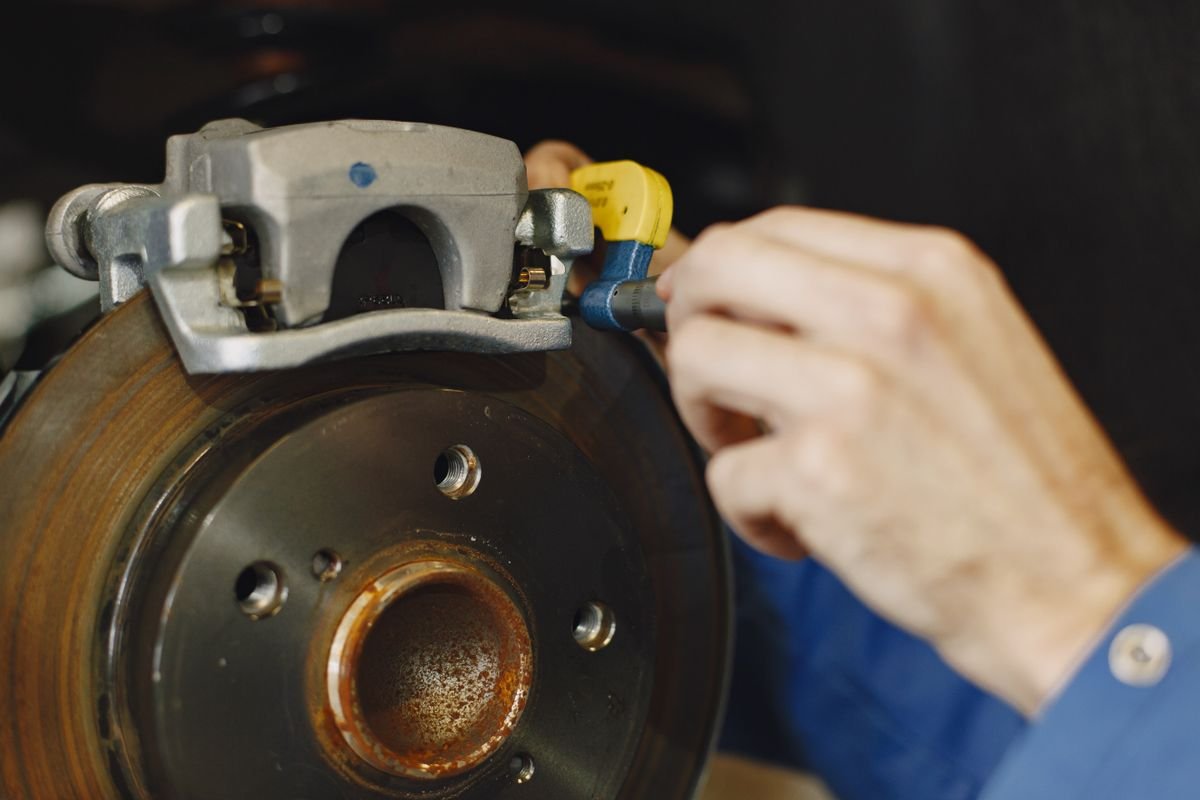
Brakes rarely fail without warning. Almost every brake problem starts with a noise, a vibration or a change in how the pedal feels, and catching it early is the difference between a quick pad change and a much larger repair bill.
In the heat of the UAE, with stop-start traffic and hard braking from highway speed, brakes work harder than most drivers realise. Here is what the common sounds usually mean.
A high-pitched squeal
Most brake pads have a small metal tab that touches the disc when the pad material gets thin. The squeal it makes is a built-in wear warning. Light squealing in the first few minutes after a cold start can also be harmless dust or moisture.
- Constant squeal while driving usually means worn pads
- Squeal only when braking gently can mean glazed pads or dry contact points
- Squeal that disappears after a few stops is often just surface dust
A deep grinding or scraping noise
Grinding is different. It usually means the pad material is gone and metal is rubbing on metal. This damages the disc quickly and reduces braking power, so it should not be left.
- Stop driving if the grinding is loud and constant
- Expect the discs to need replacing as well as the pads if it has gone on for a while
- A scraping sound can also be a stone or debris caught behind the disc shield
Pedal and steering symptoms
- Pedal feels soft or sinks slowly: possible air or a leak in the brake fluid system, or worn components
- Steering wheel or pedal shakes when braking: often warped or unevenly worn discs
- Car pulls to one side when braking: a sticking caliper or uneven pad wear
- Brake warning light on: check fluid level and have the system inspected
What to do
If the brakes feel unsafe, do not keep driving to see how it goes. Pull over safely and get the car checked. A mechanic will remove the wheels, measure the pad thickness, check the discs for scoring or warping, and look at the fluid and lines for leaks.
If your brakes are squealing, grinding or feeling different, call or WhatsApp the workshop with a description of the sound and when it happens, and we will tell you what is likely and how soon to come in.